

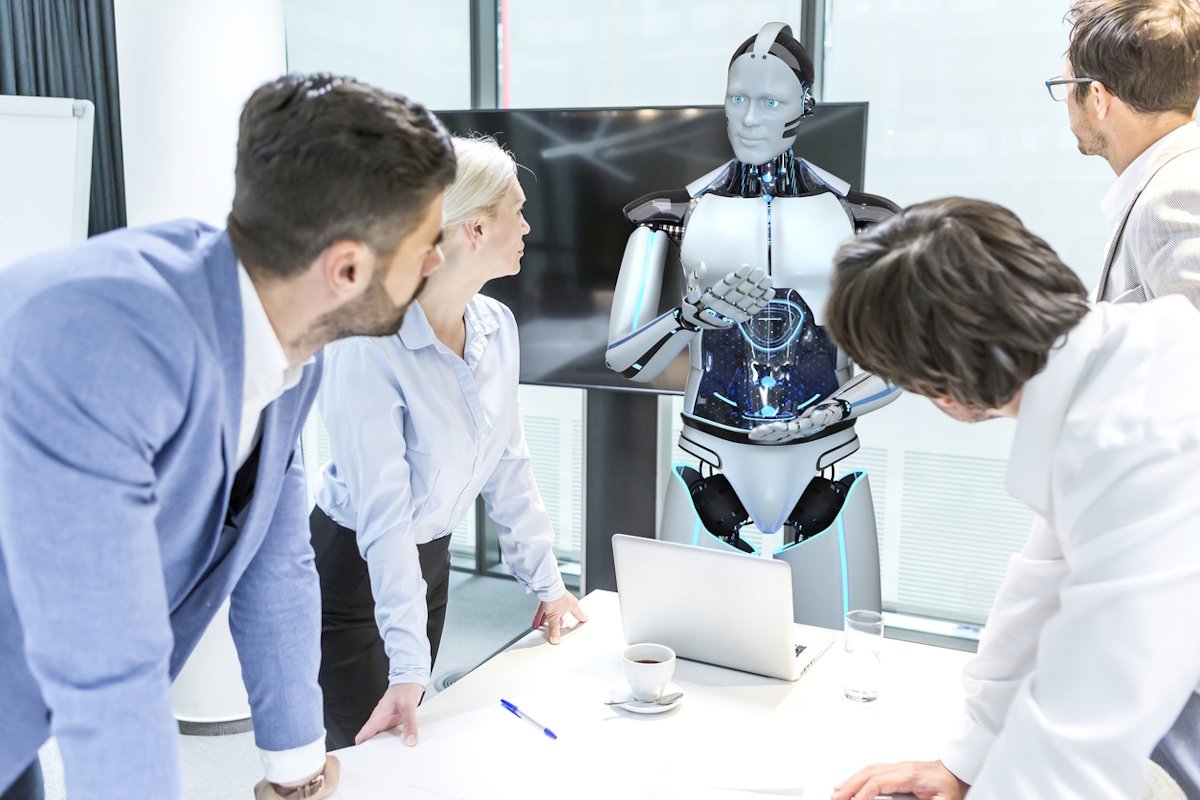
Artificial intelligence (AI) and innovation are changing how American businesses operate, serve customers, and compete in the global market. From technology companies to healthcare, finance, retail, and manufacturing, business leaders are finding new ways to use technology to solve problems and improve performance.
Today, successful CEOs are not only focused on profits. They are also investing in digital transformation, automation, data-driven decisions, and new business models. Their goal is to build companies that can adapt to a fast-changing world.
But who are the CEOs transforming American business through AI and innovation, and how are their strategies changing the future of the economy?
How AI Is Changing American Business
AI has become an important business tool. Companies use it to analyze large amounts of data, improve customer service, automate repetitive tasks, and develop new products.
For example, AI-powered customer service systems can answer common questions, while predictive analytics can help businesses understand customer needs. Manufacturing companies use intelligent systems to identify equipment problems before they cause expensive delays.
These applications allow companies to save time, improve efficiency, and make better decisions.
However, AI is not just about replacing manual work. It also creates opportunities for employees to focus on creative thinking, problem-solving, and strategic planning.
CEOs Leading the AI and Innovation Revolution
Several American business leaders are helping bring AI into everyday business operations. Their approaches differ, but they share a focus on technology, long-term growth, and competitive advantage.
1. Satya Nadella – Microsoft
Satya Nadella has played a major role in making AI a central part of Microsoft’s business strategy. Under his leadership, Microsoft has expanded its AI capabilities across cloud computing, productivity software, and enterprise services.
Products such as Microsoft Copilot help users work with documents, analyze information, write content, and complete everyday tasks.
Microsoft’s AI strategy also focuses on Azure, its cloud computing platform, which provides businesses with tools to develop and operate AI applications.
Nadella’s approach demonstrates how established companies can use innovation to improve existing products while creating new sources of growth.
2. Jensen Huang – NVIDIA
Jensen Huang, the CEO of NVIDIA, has helped position the company at the center of the AI computing industry.
Modern AI systems require powerful computing hardware to train models and process information. NVIDIA’s graphics processing units (GPUs) and related software platforms are widely used in AI research, data centers, and advanced computing.
The growth of generative AI has increased demand for computing infrastructure. NVIDIA’s business illustrates how innovation in hardware and software can support technological change across many industries.
Its technology is used by organizations developing AI models, autonomous systems, scientific applications, and enterprise tools.
3. Sundar Pichai – Google and Alphabet
Sundar Pichai leads Google and its parent company, Alphabet. AI is an important part of the company’s work across search, cloud computing, productivity tools, and digital services.
Google develops AI models and tools designed to help people find information, create content, and complete complex tasks. Its cloud business also provides AI services for companies seeking to modernize their operations.
Pichai’s leadership reflects a broader industry shift: businesses are increasingly integrating AI into products that millions of people already use.
The challenge is to make these systems useful, reliable, and safe while maintaining user trust.
4. Mark Zuckerberg – Meta
Mark Zuckerberg has made AI a major priority at Meta, the company behind Facebook, Instagram, and WhatsApp.
Meta uses AI to recommend content, improve advertising performance, support creators, and develop conversational tools. These systems help the company personalize user experiences and connect businesses with potential customers.
AI also plays a role in Meta’s research into virtual and augmented reality technologies.
For businesses, Meta’s approach shows how AI can influence marketing, customer engagement, digital advertising, and the creator economy.
5. Lisa Su – AMD
Lisa Su, CEO of AMD, has helped expand the company’s position in high-performance computing and AI hardware.
AMD develops processors and accelerators used in computers, servers, and data centers. As businesses invest in AI infrastructure, demand for computing products capable of handling demanding workloads has become increasingly important.
AMD’s work highlights the importance of competition in the semiconductor industry. Multiple technology providers can give businesses more choices in performance, cost, and computing architecture.
How CEOs Use AI to Improve Business Performance
Business leaders can apply AI in several practical ways.
Improving productivity: AI assistants can help employees summarize documents, organize information, generate first drafts, and complete repetitive tasks.
Making better decisions: Data analysis tools can identify patterns, forecast demand, and support planning.
Enhancing customer experiences: AI can help companies personalize recommendations, respond to questions, and understand customer feedback.
Reducing operating costs: Automation can reduce manual effort and help businesses use resources more efficiently.
Developing new products: Companies can use AI to build new services, improve existing products, and explore different business opportunities.
The results depend on how well these tools fit a company’s needs. Buying AI software alone does not guarantee better performance.
Challenges CEOs Must Address
Despite its benefits, AI creates important challenges for American businesses.
Data privacy is a major concern because AI systems may process sensitive customer or company information. Businesses must establish clear rules for collecting, storing, and using data.
Accuracy is another issue. AI systems can generate incorrect or misleading information, so human review remains important for high-impact decisions.
Companies must also consider cybersecurity, employee training, intellectual property, and the cost of implementing new technology.
Responsible CEOs need to balance innovation with accountability. They should evaluate AI systems carefully, monitor their performance, and ensure employees understand both their capabilities and limitations.
The Future of American Business Through AI and Innovation
AI is likely to remain an important part of American business strategy. As the technology develops, companies may find new ways to improve healthcare services, modernize manufacturing, strengthen financial analysis, and deliver more personalized customer experiences.
The most successful organizations will not necessarily be those that adopt the most AI tools. They will be the ones that solve real problems, train their employees, protect customer data, and measure whether their investments produce meaningful results.
CEOs will continue to play a key role in deciding how technology fits into business goals and company culture.
Conclusion
The CEOs transforming American business through AI and innovation are helping shape the next stage of economic and technological development. Leaders such as Satya Nadella, Jensen Huang, Sundar Pichai, Mark Zuckerberg, and Lisa Su demonstrate how AI infrastructure, software, data, and digital platforms can create new opportunities.
Their experiences also offer an important lesson for businesses of every size: innovation works best when it serves a clear purpose.
Companies that combine technology with skilled employees, responsible leadership, and customer-focused thinking will be better positioned to compete in the years ahead.
