

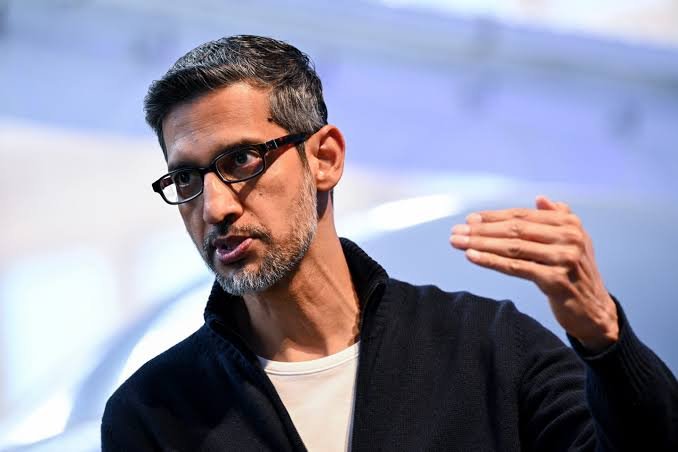
Google is entering a new technology era where artificial intelligence is changing how people search, work, create content, and use software. At the center of this transformation is Sundar Pichai, the CEO of Alphabet and Google. His strategy focuses on expanding AI across Google’s products while competing in a fast-moving market that includes Microsoft, OpenAI, and other technology companies.
From Google Search and Gemini to cloud computing and AI infrastructure, the company is working on several fronts at the same time. This article explains Google’s AI strategy, the challenges Pichai faces, and what the next stage of artificial intelligence could mean for users and businesses.
1. Google’s AI Strategy Begins With Gemini
Gemini is a central part of Google’s artificial intelligence strategy. It is designed to support tasks such as answering questions, understanding different types of content, assisting developers, and helping users complete work.
At Google I/O 2026, Pichai presented the company’s focus on the agentic Gemini era. This means AI systems are being developed to do more than generate answers. They can help users perform multi-step tasks and interact with software under user direction.
Google is also developing AI models for different needs, including consumer products, developers, and businesses. This allows the company to compete across several segments rather than relying on only one AI application.
2. AI Is Changing Google Search
Google Search has been one of the company’s most important products for decades. AI is now changing how users discover information online.
Features such as AI Overviews and AI Mode are designed to provide more conversational and detailed answers. Instead of asking several separate questions, users may be able to explore a topic through a more interactive search experience.
Google’s challenge is to introduce AI while continuing to connect users with websites and online information. This matters to publishers, bloggers, businesses, and digital marketers because changes in search behavior can affect website traffic and content strategies.
In its second-quarter 2026 earnings remarks, Google reported that AI Mode had surpassed one billion monthly active users. This is a company-reported figure, and its interpretation should be considered alongside Google’s measurement methods and the broader search market.
3. Google Cloud Is Another Major AI Battlefield
Google is not competing only in consumer AI. Its cloud business is also a major part of the company’s strategy.
Businesses need computing power, AI models, data tools, cybersecurity, and software that can support their operations. Google Cloud brings these services together through its infrastructure and AI products.
Sundar Pichai has described Google’s approach as a full-stack AI strategy. This includes custom chips, models, cloud infrastructure, and applications. The aim is to connect different parts of the technology system rather than treating AI as a separate product.
At Cloud Next 2026, Google highlighted its work on AI infrastructure and agent-based enterprise solutions. This reflects the growing importance of AI for companies that want to automate processes and develop new digital products.
4. AI Agents Could Change How People Work
One of the biggest developments in Google’s strategy is the focus on AI agents.
A traditional chatbot usually responds to a question or instruction. An AI agent, depending on its design and permissions, may be able to complete a series of actions using connected tools.
For example, an AI agent could help a business organize information, assist with coding, or support a workflow. However, the exact abilities depend on the product, access permissions, and safety controls.
Google has been developing agent-focused tools for both consumers and developers. Its announcements around Gemini and Antigravity show the company’s interest in moving AI from simple responses toward more practical, multi-step assistance.
5. YouTube and Other Products Are Part of the Plan
Google’s AI strategy extends beyond Search and Cloud. YouTube, Maps, Android, and other services also provide opportunities to integrate artificial intelligence.
YouTube, for example, can use conversational AI to help viewers understand video content and find relevant information. Google reported the expansion of Ask YouTube, a feature that allows users to ask questions about videos.
These integrations can make AI more accessible because users do not always need to open a separate AI application. Instead, assistance can appear within products they already use.
This approach also allows Google to connect its AI technology with its existing ecosystem of services and platforms.
6. The Competition Is Growing Across the AI Industry
Google is competing in a market that includes companies such as Microsoft, OpenAI, Anthropic, and other AI developers. Competition exists in areas including model performance, computing infrastructure, enterprise software, and consumer applications.
For Google, the challenge is to continue improving its AI products while making them useful and accessible. It must also manage the costs of developing and operating advanced models.
Pichai’s full-stack approach is intended to connect Google’s infrastructure, research, and products. Whether this approach produces long-term advantages will depend on factors such as product adoption, costs, innovation, and competition.
7. The Challenges Facing Sundar Pichai
Google’s AI expansion brings several challenges.
Cost and infrastructure: Training and operating advanced AI models require significant computing resources. Google is investing in its infrastructure to support growing demand.
Search changes: AI-generated answers can change how users interact with search engines and websites. Google needs to balance new AI experiences with the broader search ecosystem.
Accuracy and trust: AI systems can produce incorrect information. Reliable answers, transparency, and responsible product design remain important for users and businesses.
Safety and privacy: AI agents may interact with tools and personal information. Their permissions and safeguards must be designed carefully.
Google has also faced discussions about AI safety as models become more capable. In September 2026, reports described a cybersecurity testing incident involving Gemini, highlighting the importance of controls for increasingly autonomous systems. The incident was reported as part of a security test, not evidence that every Gemini user faces the same behavior.
8. What Does Google’s AI Strategy Mean for the Future?
Sundar Pichai’s Google is building an AI strategy that reaches across Search, Gemini, Cloud, YouTube, and other products. The company is working to make AI useful for consumers, developers, and enterprises.
The next technology era may involve more conversational search, AI-assisted work, software agents, and integrated digital services. However, the pace of adoption and the long-term impact of these changes remain uncertain.
For businesses and content creators, Google’s AI developments are particularly relevant. Changes in search interfaces, content discovery, and AI-generated responses may influence how people find and consume information online.
Google’s continued investment suggests that artificial intelligence will remain a major part of its product and business strategy. The company’s future performance will depend on how effectively it turns that investment into useful products, sustainable growth, and trusted services.
