

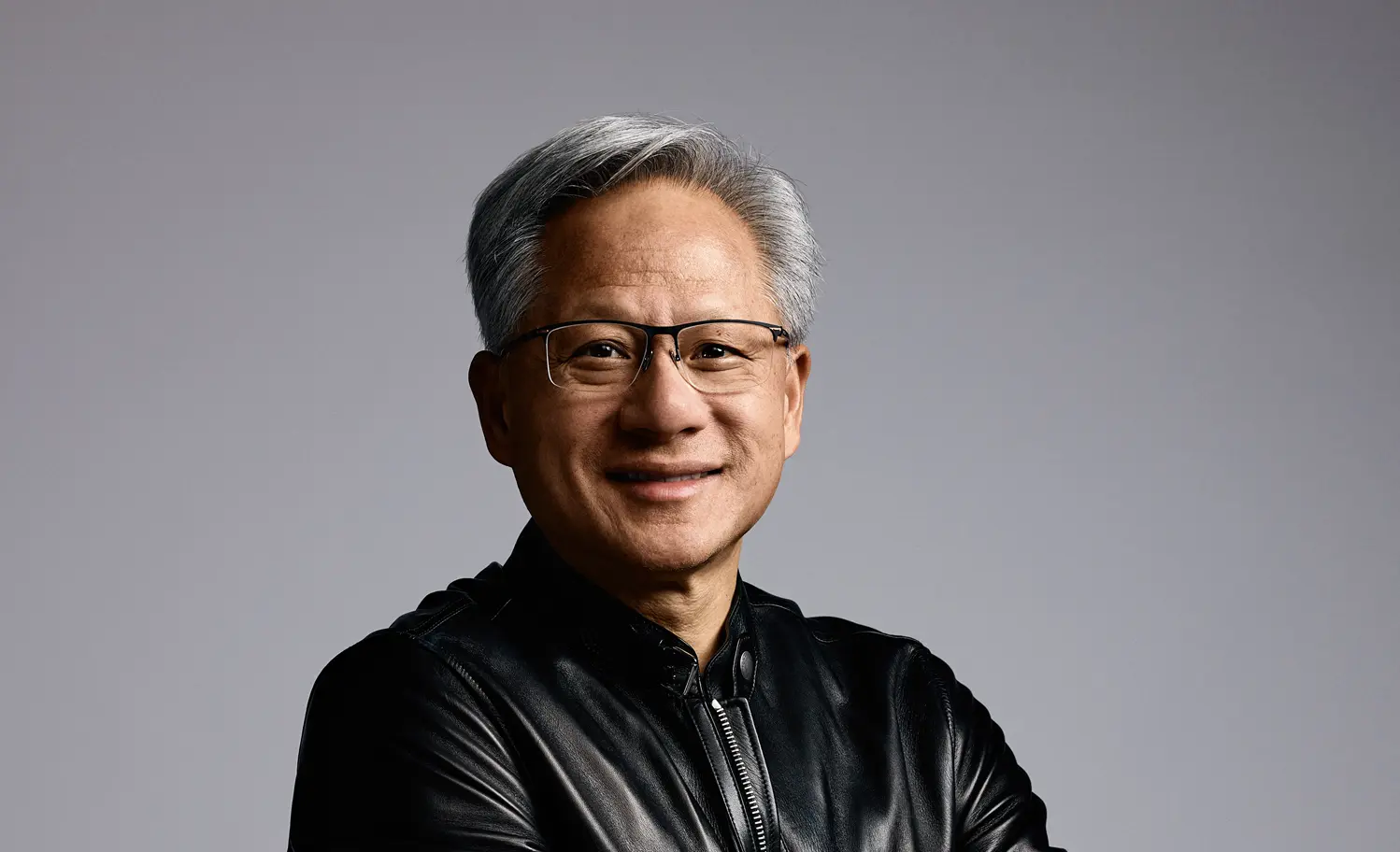
Nvidia has become one of the most important companies in the artificial intelligence (AI) industry. Under the leadership of CEO Jensen Huang, the company has moved beyond its traditional role as a graphics chip maker and become a key supplier of the technology used to develop and operate modern AI systems.
From advanced AI chips and data centers to robotics and accelerated computing, Nvidia is expanding its role in the global technology economy. But an important question remains: What is Jensen Huang building next, and how could Nvidia shape the future of AI?
This article explores Nvidia’s business, Jensen Huang’s leadership, and the company’s major growth areas in simple English.
Why Nvidia Has Become the Engine of the AI Economy
Nvidia’s importance comes from its ability to provide the hardware and software needed for AI computing. Modern AI models require enormous processing power, and Nvidia’s graphics processing units (GPUs) are designed to handle many calculations in parallel.
The company’s CUDA software ecosystem, networking technology, and data center platforms also help developers and businesses build AI applications. This means Nvidia’s business extends beyond selling individual chips.
In August 2026, Nvidia forecast strong revenue growth for its next fiscal year, supported by demand for AI infrastructure. Reuters reported that the company expected 70% revenue growth for the fiscal year ending January 2028, while also noting supply constraints and higher component costs.
This shows both the opportunity and the challenges of the AI infrastructure market.
What Is Jensen Huang Building Next?
1. The Next Generation of AI Infrastructure
One of Jensen Huang’s major goals is to build the infrastructure required for large-scale AI systems. Nvidia’s strategy includes processors, networking, software, and complete data center systems.
At the 2026 CES event, Nvidia introduced the Vera Rubin platform, which combines multiple chips into an integrated AI computing system. The company has also presented its vision of AI factories—specialized infrastructure designed to produce AI computing services at scale.
Rather than focusing only on faster chips, Nvidia is developing technologies that connect computing, networking, and software into a complete platform.
2. AI Agents and Intelligent Software
AI is moving from simple question-and-answer tools toward systems that can perform tasks, use software, and work with business data.
Jensen Huang has highlighted the importance of AI agents in the next stage of computing. Nvidia’s 2026 presentations included work on open AI models, enterprise applications, and systems designed to support autonomous agents.
For businesses, AI agents could support customer service, coding, research, data analysis, and other activities. Their practical value will depend on reliability, operating costs, security, and how well they integrate with existing workflows.
Nvidia’s role is to provide some of the computing and software foundations that make these systems possible.
3. Robotics and Physical AI
Another major area of Nvidia’s expansion is physical AI. This refers to artificial intelligence that operates in the physical world through robots, vehicles, and industrial machines.
Nvidia has introduced platforms and models for robotics simulation, autonomous driving, and embodied intelligence. Its Isaac robotics ecosystem is designed to help developers train and test robotic systems in simulated environments before deployment.
This approach could support applications in manufacturing, logistics, healthcare, and transportation. However, real-world robotics still faces challenges involving safety, hardware costs, navigation, and performance in unpredictable environments.
Huang’s vision is to help create the computing infrastructure that allows machines to understand and interact with the world.
4. AI for Every Industry
Jensen Huang does not see AI as technology limited to major software companies. Nvidia is also working to extend AI into healthcare, engineering, manufacturing, climate research, and transportation.
At CES 2026, the company described open model families for different industries, including healthcare, robotics, and autonomous driving. Nvidia also highlighted partnerships supporting industrial simulation and manufacturing.
This industry-wide approach could increase demand for AI computing beyond large language models. It also creates competition among technology providers and requires companies to demonstrate measurable business value.
Challenges Facing Nvidia and Jensen Huang
Despite Nvidia’s growth, its future is not without risks.
Competition: Other semiconductor companies and major cloud providers are developing their own AI chips and computing systems.
Supply chain pressure: Advanced AI hardware depends on complex manufacturing and memory supply chains. Component shortages can affect production costs and delivery schedules.
Energy requirements: Large AI data centers need significant electricity and cooling infrastructure. Expanding AI capacity requires investment in power generation, facilities, and network connections.
AI safety and regulation: Huang has publicly argued against the need for additional AI-specific laws in recent debates, while other technology leaders have called for stronger oversight. These differing positions show that AI development involves both technological and governance questions.
These challenges do not establish a fixed outcome for Nvidia. They are factors that investors, businesses, governments, and technology developers will continue to assess.
What Does the Future Hold for Nvidia?
Jensen Huang is building more than a chip company. Nvidia is working toward a broader technology platform that combines AI processors, data centers, software, robotics, and industry-specific solutions.
The success of this strategy will depend on whether businesses continue investing in AI, whether Nvidia can manage competition and supply constraints, and whether new AI applications deliver practical value.
For now, Nvidia’s direction shows how AI infrastructure is becoming an important part of the global technology economy.
Conclusion
Jensen Huang’s Nvidia is helping shape the next phase of artificial intelligence. Its work in AI chips, computing platforms, robotics, and enterprise software reflects a strategy focused on expanding AI into different parts of the economy.
The next chapter will not be defined by chips alone. It will also involve intelligent software, autonomous machines, industrial systems, and the infrastructure required to operate them.
The key question is how effectively Nvidia can turn its AI technology leadership into long-term value across industries.
