

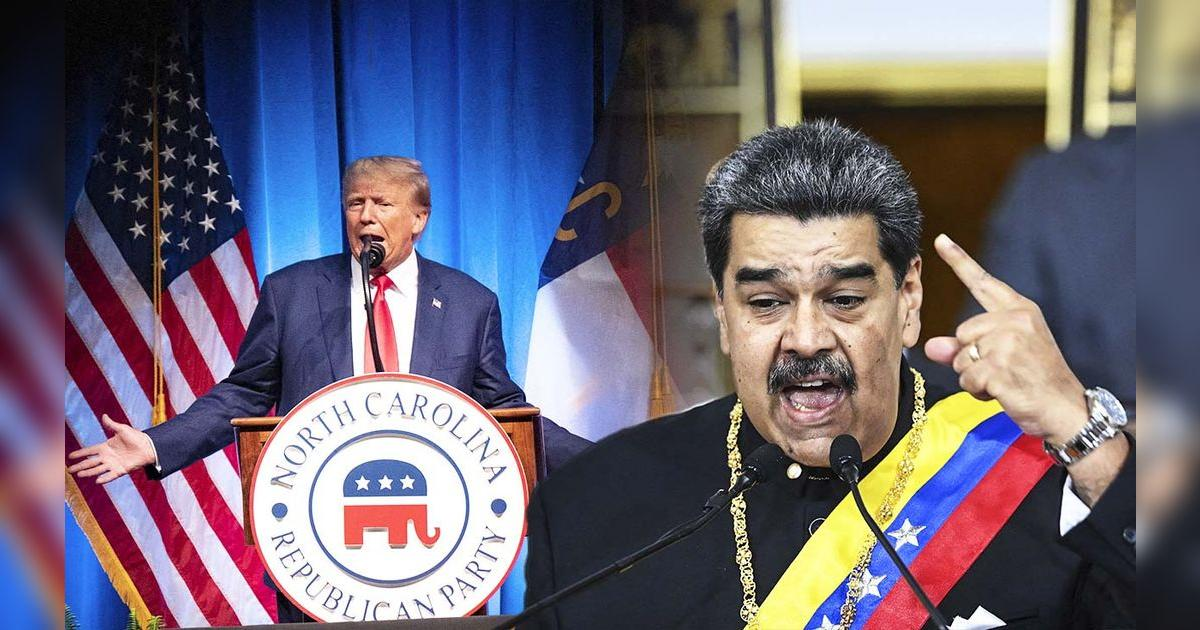
Venezuela awoke to deep uncertainty as citizens struggled to understand who, if anyone, was now governing the country following a dramatic U.S. military operation that resulted in the capture of President Nicolás Maduro. Streets in Caracas emptied, lines formed outside supermarkets and fuel stations, and a familiar sense of crisis settled over a population long accustomed to political shocks.
The confusion was compounded by statements from President Donald Trump, who suggested that the United States may coordinate with one of Maduro’s closest allies: Vice President and oil minister Delcy Rodríguez. Trump indicated that Rodríguez had communicated a willingness to cooperate with Washington, describing her as someone prepared to “do what is necessary” to stabilize the country.
Rodríguez has been a central figure in Venezuela’s power structure since 2018, overseeing the oil-dependent economy and maintaining influence across the intelligence and security apparatus. While previously sanctioned by the U.S. for her role in undermining democratic institutions, she is now being portrayed by Trump as a potential interlocutor—if not a transitional authority.
Yet on the ground in Venezuela, there was no visible confirmation of a transfer of power. State television did not broadcast any swearing-in ceremony, and Rodríguez herself made no claim to the presidency. In a defiant televised address, she demanded the immediate release of Maduro and his wife, Cilia Flores, denouncing the U.S. operation as a violation of international law and the United Nations Charter.
“There is only one president,” Rodríguez declared, insisting that Maduro remained the legitimate head of state. She was flanked by senior civilian officials and military commanders, a display seemingly designed to project unity within a ruling coalition that has often relied on cohesion to survive crises.
Trump, however, suggested that Rodríguez had already assumed authority under constitutional succession rules. That claim has not been substantiated, and legal experts note that Venezuela’s constitution requires new elections within 30 days if a president is incapacitated or removed—an outcome made murkier by the unprecedented nature of foreign military intervention.
Senior military officials quickly adopted a confrontational tone. Defense Minister Vladimir Padrino López vowed resilience, while Interior Minister Diosdado Cabello appeared on television in protective gear, urging citizens to defend national sovereignty and rally behind the armed forces.
Meanwhile, ordinary Venezuelans were left grappling with fear and ambiguity. Residents reported explosions near military installations and described staying indoors, uncertain whether violence would escalate or whether daily life could continue. “We don’t know what comes next,” said one Caracas resident, echoing a sentiment heard across the capital.
The situation also exposed fractures between Washington and Venezuela’s opposition. Trump openly dismissed opposition leader María Corina Machado, arguing she lacked sufficient domestic support to govern. The remark stunned many Venezuelans, particularly given Machado’s international standing and her alliance with Edmundo González, who opposition groups maintain won the disputed 2024 election.
Machado called on González to assume power immediately, pledging to restore democratic order, free political prisoners, and rebuild the country. Trump’s rejection of her leadership aspirations, however, raised questions about whether Washington’s priorities lie less with opposition legitimacy and more with stability and control.
Rodríguez’s potential role adds another layer of complexity. Educated abroad and fluent in English, she has cultivated relationships within global energy and financial circles and has previously engaged with U.S. intermediaries seeking influence in Venezuela’s oil sector. Unlike other hardline figures in Maduro’s inner circle, she has avoided U.S. criminal indictments, making her a more palatable—if controversial—figure for negotiation.
Analysts caution that much depends on the cohesion of the military and which officials were neutralized during the operation. Venezuela’s leadership has historically survived by closing ranks, even under extreme pressure. Whether that unity holds now may determine whether Rodríguez can consolidate authority—or whether Venezuela descends further into institutional limbo.
For now, one reality is clear: Venezuela stands at a political crossroads, with power claims competing, institutions strained, and its future uncertain not just to its people, but to the world watching closely.
