

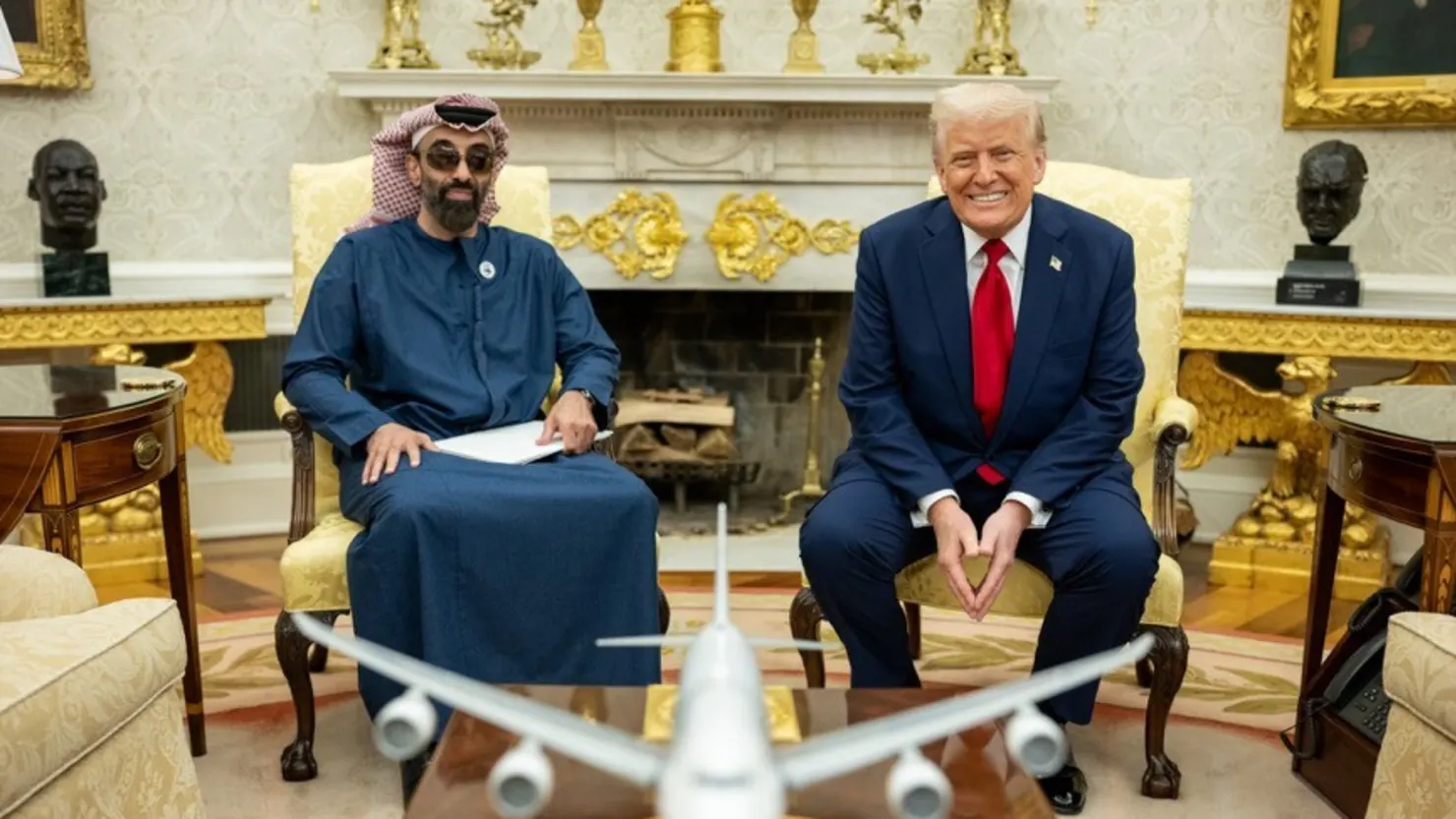
In global politics, timing is often as consequential as intent. A new report suggests the quiet intersection of foreign capital, cryptocurrency, artificial intelligence, and U.S. national security may now demand closer scrutiny.
According to an investigation by The Wall Street Journal, Sheikh Tahnoon bin Zayed Al Nahyan, a senior royal and government official of the United Arab Emirates, purchased a substantial stake in a Trump-linked cryptocurrency company—months before the United States approved a major transfer of advanced AI chips to the UAE.
The sequence of events, while not proven to be coordinated, has raised alarms among lawmakers and policy experts.
A Powerful Figure Behind a Quiet Investment
Sheikh Tahnoon is no ordinary investor. He serves as the UAE’s national security adviser and oversees some of the country’s most influential sovereign wealth and investment vehicles. Known in diplomatic circles as the “Spy Sheikh” for his intelligence background, he occupies a uniquely powerful position at the intersection of security, finance, and technology.
Through Aryam Investment, a company linked to him, Tahnoon reportedly acquired a 49% stake in World Liberty Financial—a crypto venture tied to the Trump family. The deal, valued at roughly $500 million, would make Aryam the firm’s largest shareholder.
World Liberty Financial is the issuer of USD1, a stablecoin pegged to the U.S. dollar and backed by Treasury securities and cash equivalents.
Trump Family Ties and Financial Flow
World Liberty Financial lists Donald Trump and his special envoy Steve Witkoff as co-founders emeritus. The company is reportedly operated by members of the Trump and Witkoff families.
The Journal reported that the agreement was signed by Eric Trump shortly before Trump’s second inauguration. As part of the transaction, approximately $187 million flowed to Trump family entities and $31 million to Witkoff-related entities.
While private business dealings by presidential families are not illegal per se, the optics—and potential policy overlap—have intensified scrutiny.
The AI Chip Deal That Followed
Months after the crypto investment, the U.S. government approved the sale of hundreds of thousands of advanced AI chips to the UAE, supplied by Nvidia.
Notably, about one-fifth of those chips were earmarked for G42, an artificial intelligence firm backed by Sheikh Tahnoon himself.
The Biden administration had previously blocked similar sales over concerns that sensitive AI technology could be diverted to China. The later approval under the Trump administration marked a significant policy shift.
Why Lawmakers Are Concerned
Several U.S. lawmakers have framed the timing as deeply troubling. Senator Elizabeth Warren, the top Democrat on the Senate Banking Committee, called the situation “corruption, plain and simple,” urging congressional testimony from senior officials involved in crypto and AI policy.
From a governance standpoint, the concern is not only about legality, but about precedent. Advanced AI chips are widely viewed as strategic assets with national security implications. When approvals follow large foreign investments connected to presidential business interests, even the appearance of impropriety can undermine trust.
White House Response and Political Pushback
The White House has denied any conflict of interest. A spokesperson stated that there were “no conflicts,” while emphasizing that Witkoff’s role is focused on advancing diplomatic goals.
Deputy Attorney General Todd Blanche dismissed the criticism, arguing that similar accusations had been made—without proof—against the Biden family in previous years.
Republicans have long maintained that scrutiny of foreign business dealings should apply evenly, regardless of political affiliation.
The Bigger Picture: Crypto, AI, and Power
From a strategic perspective, this episode highlights a broader reality: the boundaries between geopolitics, emerging technology, and private capital are increasingly blurred.
Cryptocurrency firms now sit adjacent to sovereign wealth. AI hardware decisions carry military and economic implications. And political families remain entangled in global business ecosystems.
For executives and policymakers alike, the lesson is clear. Transparency is no longer optional—it is foundational to credibility.
What Happens Next
While no formal investigation has yet been announced, pressure is mounting for congressional hearings. At minimum, lawmakers are likely to seek clarity on how AI export decisions are made, and whether existing ethics frameworks are adequate for a world where digital assets and national security overlap.
For the UAE, the episode reinforces its growing influence in advanced technology and global finance. For the U.S., it raises uncomfortable questions about governance in the age of crypto and AI.
The Bottom Line
There is no public evidence—yet—of wrongdoing. But leadership is not judged solely on legality. It is judged on judgment.
As artificial intelligence, digital currencies, and geopolitics converge, the standards for transparency and accountability will only rise. This story may ultimately become less about one deal, and more about how democracies manage power in a rapidly changing technological era.
