

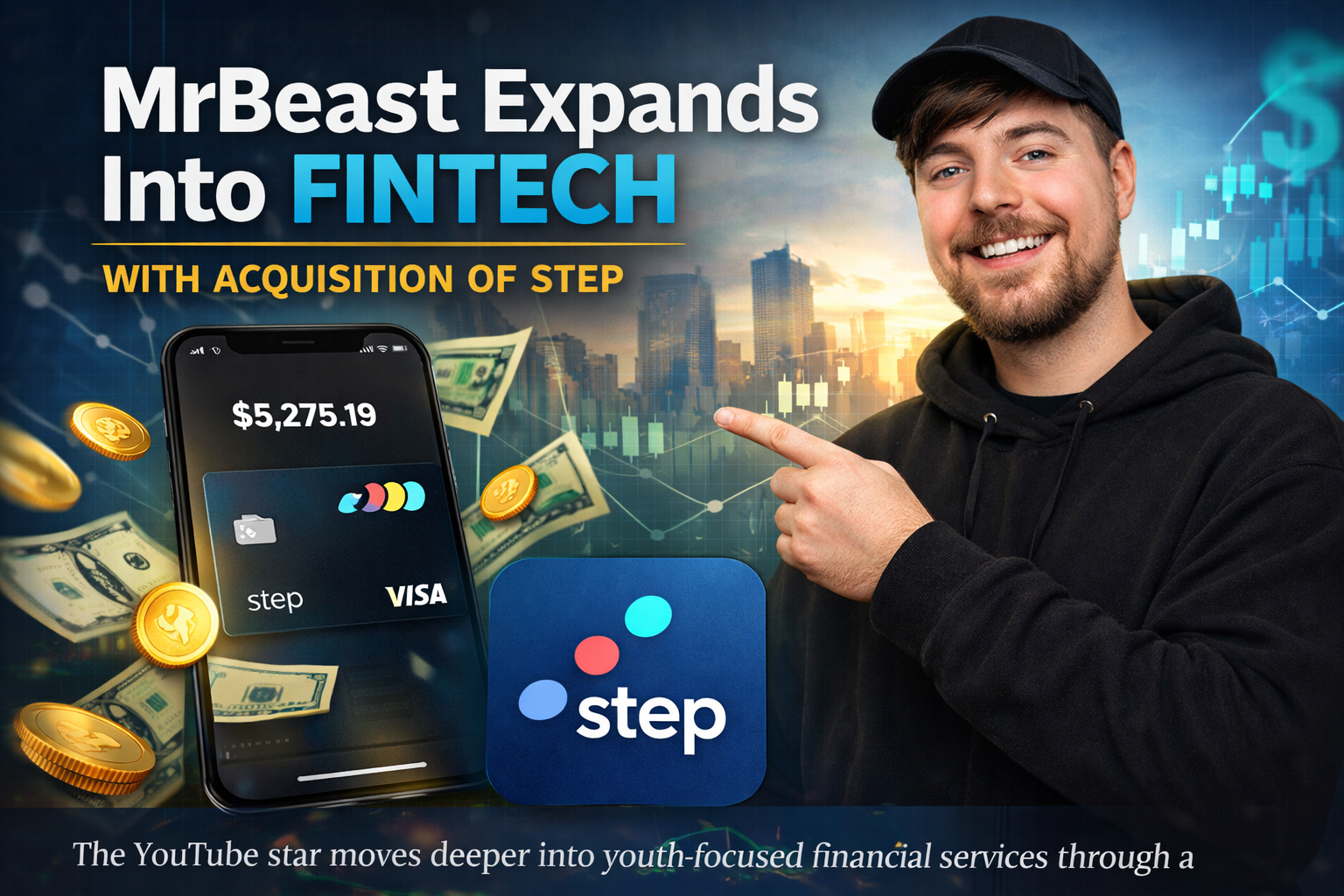
The move marks a significant expansion of creator-led business models into financial services, as MrBeast adds fintech to a rapidly growing portfolio that already spans food, merchandise, and media.
The YouTube star—whose real name is Jimmy Donaldson—has acquired Step, a financial services app designed primarily for teenagers and young adults. The acquisition positions MrBeast at the intersection of creator influence and youth-focused banking, an area attracting increasing interest as younger users seek alternatives to traditional financial institutions.
Founded in 2018, Step built its brand around helping teens and young adults manage money through fee-free banking, debit cards, and financial education tools, often requiring parental oversight for underage users. The app gained traction by targeting Gen Z users who were underserved—or overlooked—by conventional banks. By the time of the acquisition, Step had reached millions of users across the U.S., backed by venture capital investors and partnerships with established financial institutions.
For MrBeast, the deal represents a logical extension of his brand. With hundreds of millions of followers across platforms, Donaldson commands one of the largest and most engaged youth audiences in the world. His business strategy has increasingly focused on converting attention into long-term consumer relationships, rather than one-off brand endorsements. Acquiring a fintech platform allows him to embed his brand into everyday financial behavior—a far deeper form of engagement than merchandise or entertainment alone.
The move also reflects a broader shift in how creators are thinking about scale and sustainability. As advertising revenue becomes more volatile and platform algorithms less predictable, top creators are seeking ownership stakes in businesses that generate recurring revenue. Financial services, while heavily regulated, offer exactly that: sticky users, long-term value, and data-driven insights into consumer behavior.
From Step’s perspective, the acquisition brings unparalleled marketing reach. Youth banking apps face high customer acquisition costs, often competing with both traditional banks and fintech startups backed by large budgets. MrBeast’s involvement provides instant visibility and cultural relevance, especially among Gen Z users who already associate his brand with trust, generosity, and large-scale giveaways.
However, the expansion into fintech also introduces new challenges. Financial services are subject to strict regulatory oversight, compliance requirements, and data protection standards—areas far removed from content creation. While Step will continue to operate as a regulated financial platform, MrBeast’s brand will inevitably be tied to its performance, customer experience, and security practices. Any missteps could carry reputational risk.
Industry analysts note that the acquisition fits into a growing trend of non-traditional players entering financial services. From technology companies to retailers and now digital creators, the line between banking and consumer brands continues to blur. What differentiates MrBeast’s move is the scale of influence behind it: few individuals can directly reach tens of millions of young consumers with a single post or video.
The deal also raises questions about how financial literacy will be framed within creator-led platforms. MrBeast has built a reputation around philanthropy and high-impact stunts, often emphasizing generosity and social good. If leveraged effectively, Step could become not just a banking app, but a tool for educating young users about saving, spending, and responsible financial behavior—areas where early habits can shape long-term outcomes.
While financial terms of the acquisition were not disclosed, the strategic implications are clear. MrBeast is no longer just a content creator or brand ambassador—he is becoming an operator in regulated, infrastructure-level businesses. The acquisition of Step signals a shift from monetizing attention to owning platforms that shape consumer behavior.
As creators continue to evolve into full-scale entrepreneurs, MrBeast’s fintech play may serve as a case study for how influence, when paired with ownership and infrastructure, can redefine entire industries. Whether this model becomes the norm will depend on execution—but the signal to both creators and financial institutions is unmistakable.
