

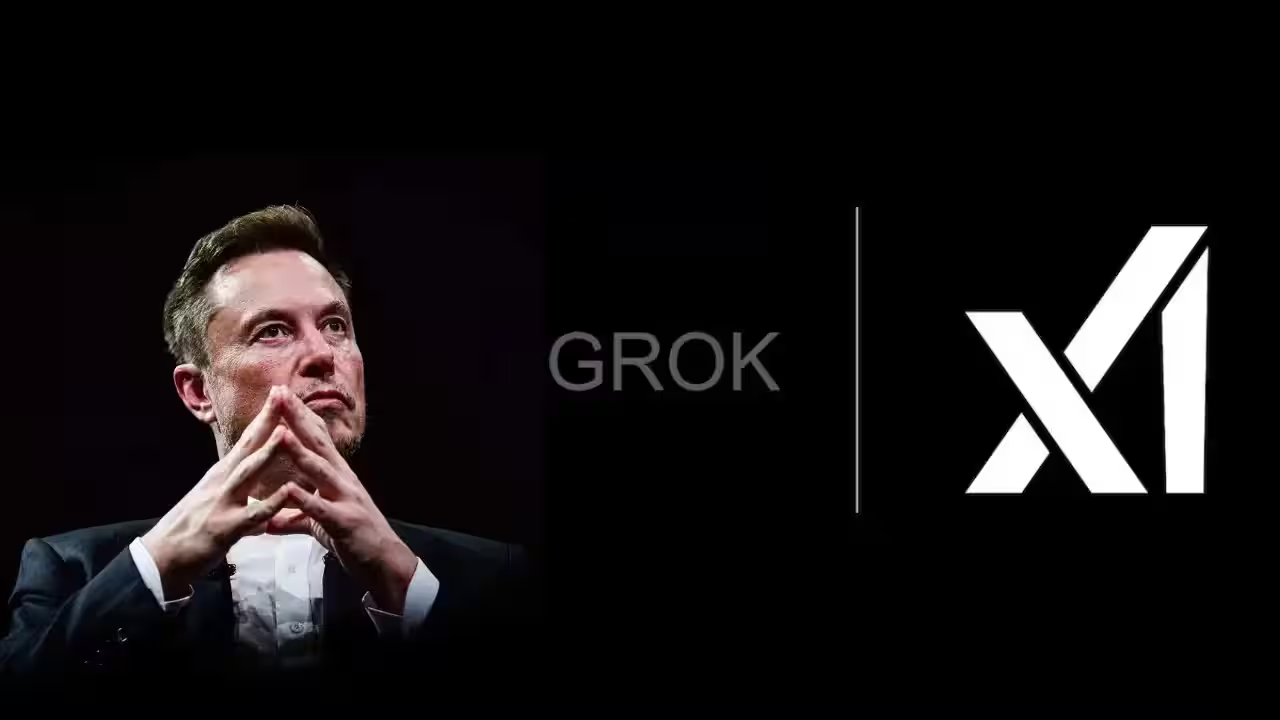
Artificial intelligence (AI) is becoming one of the most important technologies in the world. From writing content and answering questions to developing software and analyzing data, AI tools are changing how people work and communicate. Among the companies competing in this fast-growing market is xAI, founded by entrepreneur Elon Musk.
The company has developed Grok, an AI assistant designed to answer questions, generate content, analyze information, and interact with users through digital platforms. At the same time, xAI has been investing in AI infrastructure, including powerful computing systems needed to train and operate advanced AI models.
But where does Grok fit into the global AI race? Can xAI compete with companies such as OpenAI, Google, Anthropic, and Meta? Understanding its technology, business strategy, and challenges helps explain why xAI has become an important name in the AI industry.
What Is xAI, and Why Is It Important?
xAI is an artificial intelligence company founded by Elon Musk in 2023. Its goal is to develop advanced AI systems that can understand information, solve problems, and help people explore complex questions.
The company operates in a highly competitive market where technology companies are spending billions of dollars on AI research, computing power, and data infrastructure.
Unlike a small software startup, xAI is pursuing a strategy that combines AI model development with large-scale computing infrastructure. Building advanced AI requires specialized computer chips, reliable electricity, data centres, skilled engineers, and enormous financial resources.
This infrastructure is important because powerful AI models need substantial computing capacity during both training and everyday use.
For xAI, developing its own AI capabilities and expanding access to computing resources could help it improve Grok and compete with established AI providers.
What Is Grok AI?
Grok is xAI’s AI assistant. It can perform tasks such as answering questions, summarizing information, helping with coding, generating text, and assisting with research.
One feature that distinguishes Grok is its connection with the social platform X, formerly known as Twitter. This connection can help it work with social conversations and current discussions, depending on the product version, available tools, and user access.
For users, Grok aims to provide a conversational way to explore information and complete everyday tasks. For businesses, AI assistants can support research, customer service, content development, software engineering, and data analysis.
However, access to current information does not automatically make an AI response accurate. Users still need to verify important facts, especially when dealing with financial decisions, health questions, politics, or breaking news.
Grok’s long-term success will depend on more than its ability to generate quick answers. Its reliability, reasoning skills, speed, safety, and usefulness will also matter.
Why Is xAI Building a New AI Power Centre?
The global AI race is not only about which company develops the smartest chatbot. It is also about which company can access enough computing power to train, improve, and operate advanced models.
AI infrastructure has become a major competitive advantage. Large-scale data centres can contain thousands of specialized processors that work together to handle complex calculations.
xAI has pursued this approach through large computing projects, including its Colossus supercomputer infrastructure in Memphis, Tennessee. Such facilities are designed to provide the computing capacity required for AI development at scale.
A powerful computing centre can offer several advantages:
- Faster model development: More computing resources can help researchers train and test models more quickly.
- Improved AI capabilities: Large-scale training can support the development of more capable models, although results also depend on data and research quality.
- Greater control: Dedicated infrastructure can reduce reliance on external computing providers.
- More capacity for users: Additional computing resources can help support AI services as demand grows.
However, building an AI power centre is expensive. Electricity, cooling, advanced chips, networking equipment, maintenance, and environmental considerations all affect the cost of operating these facilities.
Infrastructure alone does not guarantee that a company will build the best AI model. Research, engineering, data quality, product design, and safety remain essential.
Where Does Grok Fit Into the Global AI Race?
Grok competes in a market that includes several major AI systems. Each company has different strengths, business models, and distribution strategies.
OpenAI develops ChatGPT and other AI technologies. Google integrates Gemini into its wider technology ecosystem. Anthropic focuses on Claude, including capabilities for writing, coding, and complex work. Meta develops Llama models and incorporates AI into its products.
xAI’s strategy combines Grok with its computing infrastructure and its relationship with X.
This approach gives the company several potential advantages.
First, X can provide a distribution channel through which users discover and interact with Grok. Second, the company’s infrastructure investments can support the development and deployment of its models. Third, the rapid exchange of information on social platforms creates opportunities for AI tools designed to help users explore current discussions.
Nevertheless, xAI faces serious competition. Other AI companies have established products, large engineering teams, developer communities, business customers, and relationships with cloud computing providers.
Grok must demonstrate that it offers meaningful advantages rather than simply another way to access a chatbot.
Can Grok Compete With ChatGPT, Gemini, and Claude?
The answer depends on how users measure success.
For everyday users, the most important factors may be answer quality, ease of use, speed, pricing, and access to current information. For developers, coding performance, APIs, documentation, and integration options may matter more.
Businesses often evaluate security, privacy controls, reliability, administrative features, and the total cost of using an AI system.
Grok may appeal particularly to people who already use X and want an AI assistant connected to discussions on that platform. ChatGPT, Gemini, and Claude each offer different capabilities and ecosystems that may suit other users better.
There is no single AI assistant that is automatically the best choice for every task. Performance can change as companies release new models and update existing products.
The competition will therefore depend on continuous improvement rather than one successful launch.
The Business Opportunity Behind xAI
The AI market creates opportunities to earn revenue through subscriptions, enterprise services, developer tools, and access to advanced models.
For xAI, Grok could become a more valuable product as its capabilities improve and its user base grows. AI infrastructure can also support the company’s ability to serve more customers, although operating costs remain significant.
The wider business opportunity extends beyond chatbots. AI can help companies automate repetitive tasks, improve software development, analyze large amounts of information, and provide faster customer support.
However, commercial success depends on whether customers find enough value to pay for these services. High infrastructure costs, strong competition, changing regulations, and concerns about AI reliability can all affect profitability.
For investors and technology observers, it is important to distinguish between ambitious expansion plans and proven financial results.
Challenges Facing Elon Musk’s AI Company
Despite its potential, xAI faces several challenges.
1. High infrastructure costs: Advanced AI systems require expensive computing equipment and substantial electricity.
2. Strong competition: Established AI companies have significant resources, experienced teams, and large customer bases.
3. Accuracy and trust: Incorrect answers or misleading information can reduce user confidence.
4. Privacy and safety: AI providers must address data protection, harmful outputs, and responsible use.
5. Long-term profitability: Rapid growth does not necessarily mean that revenue will exceed operating and development costs.
How xAI manages these challenges will influence Grok’s position in the global AI market.
What Is Next for Grok and xAI?
The next stage of the AI race will likely involve more capable reasoning, improved coding tools, multimodal systems that understand text and other forms of information, and AI agents that can perform multi-step tasks.
For Grok, progress in these areas could make it more useful to individuals, developers, and businesses.
xAI’s computing infrastructure may support faster experimentation and larger-scale AI services. However, the real measure of success will be whether the company can turn that computing capacity into reliable products that people want to use.
The AI industry is developing quickly, and today’s competitive positions may change as new models and technologies appear.
Conclusion
Elon Musk’s xAI is trying to build a strong position in artificial intelligence by combining Grok with large-scale computing infrastructure. Its connection to X provides a distinctive distribution channel, while its investment in AI computing could support future model development.
Still, the global AI race is about more than building powerful data centres or attracting attention. It requires useful technology, accurate answers, responsible development, sustainable business models, and customer trust.
Grok has the opportunity to become a major AI assistant, but its long-term position will depend on how well it performs against competing systems and how effectively xAI turns its technical ambitions into real-world value.
For now, Grok is an important competitor in a rapidly changing market, while the final winners of the global AI race remain uncertain.
