

Artificial intelligence is moving into a new phase. The first wave of AI focused heavily on chatbots, search, coding, and business automation. The next wave could be more personal. Instead of simply answering questions, AI may learn how people work, understand their preferences, remember important context, and help them make decisions.
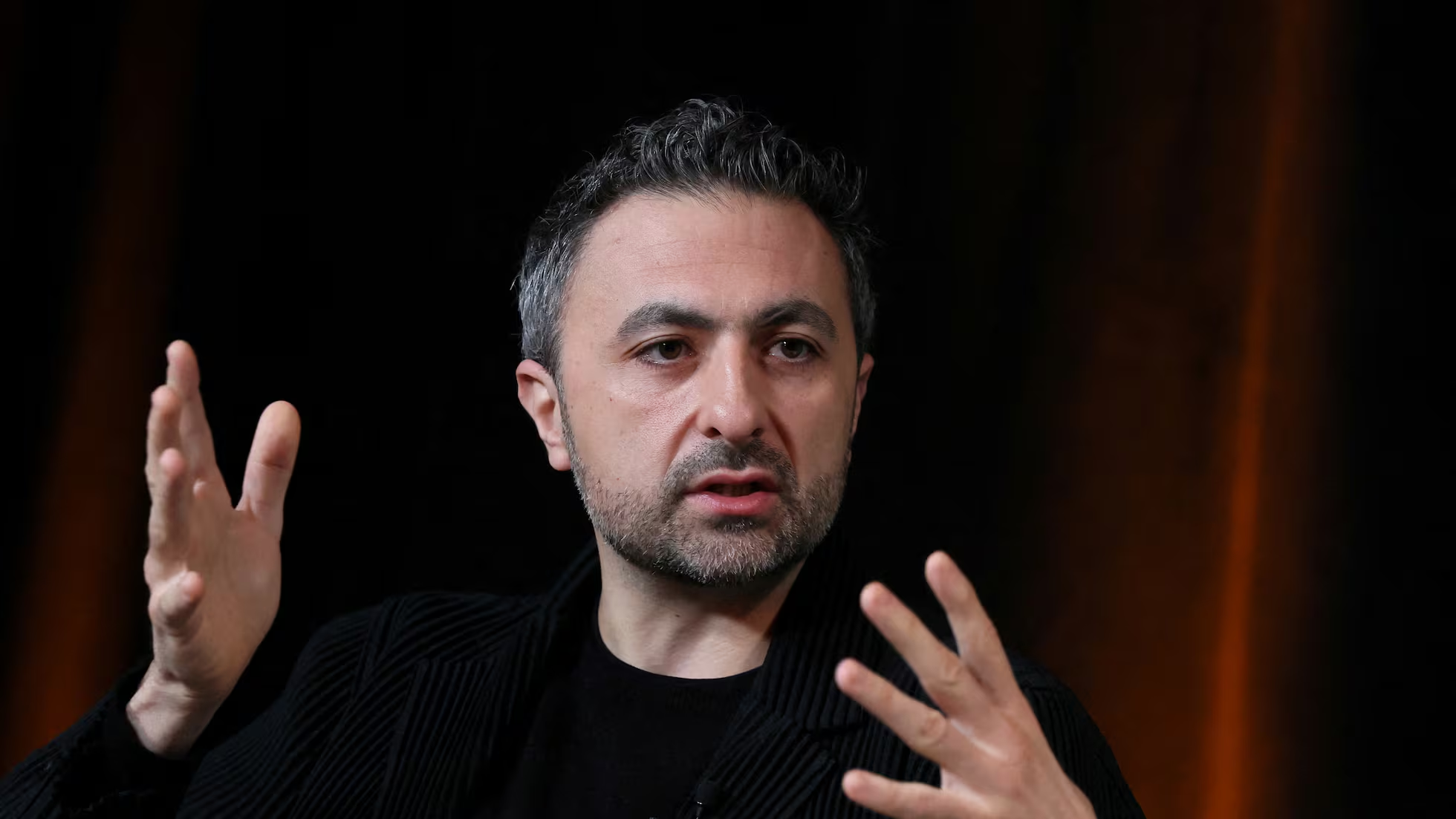
This idea is closely connected to Mustafa Suleyman’s AI vision at Microsoft. Suleyman, a co-founder of DeepMind and a major figure in the development of modern AI, joined Microsoft to lead its consumer AI business. His work has helped shape conversations about how AI assistants could become more useful, personal, and deeply integrated into everyday life.
Who Is Mustafa Suleyman?
Mustafa Suleyman is a British artificial intelligence entrepreneur and researcher. He co-founded DeepMind, which became one of the world’s best-known AI research companies and was acquired by Google.
After leaving Google, Suleyman co-founded Inflection AI, a company focused on creating personal AI assistants. In 2024, Microsoft announced that Suleyman would lead its new Microsoft AI organization, bringing together consumer AI products and research.
His background is important because his approach to AI has often focused not only on powerful models but also on how people interact with intelligent systems.
What Is Personal Intelligence?
Personal intelligence is the idea that AI can become much more useful when it understands the individual using it.
A traditional search engine gives the same basic information to millions of people. A general chatbot can answer questions based on the conversation it is having with you.
Personal AI could go further.
Imagine an assistant that understands your work habits, writing style, preferences, goals, schedules, and previous decisions. Instead of asking you to explain everything from the beginning, the AI could use relevant context to provide a more useful answer.
For example, a personal AI could help someone:
- Organize daily tasks
- Draft emails in their preferred style
- Prepare for meetings
- Summarize important information
- Remember previous decisions
- Research topics based on personal interests
- Plan projects
- Compare options before making decisions
This is where AI could shift from being a tool you use to an assistant that works with you.
Why Microsoft Is Important to This Vision
Microsoft has a huge advantage in personal AI because its products are already deeply connected to people’s daily work and communication.
Microsoft 365 includes applications such as Word, Excel, PowerPoint, Outlook, and Teams. Windows also gives Microsoft a direct connection to consumers and their computers.
AI integrated into these products could potentially understand a user’s workflow across multiple tasks.
For example, instead of simply asking an AI to write a business report, a user could ask it to review meeting notes, analyze relevant data, identify important trends, prepare a report, and create a presentation.
That changes the role of AI from content generation to personal productivity and decision support.
From AI Chatbots to AI Agents
Another important part of the next AI revolution is the development of AI agents.
A chatbot mainly responds to prompts. An AI agent can potentially take multiple steps to complete a task.
For example, instead of asking:
“How can I organize my business meeting?”
A user might eventually tell an AI:
“Find a suitable time, prepare the agenda, review previous meeting notes, create the presentation, and send the invitations.”
The AI would then perform a series of actions.
This agent-based approach could make personal intelligence significantly more powerful. However, it also creates new challenges around security, privacy, permissions, and human control.
Why Personal AI Could Be More Valuable Than Another Chatbot
The AI market is becoming increasingly competitive. Many companies can build or access powerful language models.
The bigger question may be: What can an AI do with its intelligence?
A model alone may not create a strong personal advantage. The real value could come from combining AI with useful context, applications, data, and user preferences.
This is one reason Microsoft’s ecosystem matters.
If AI is integrated into email, documents, calendars, meetings, operating systems, and productivity applications, it can potentially become more useful than a standalone chatbot.
The competitive advantage could therefore move from simply having a powerful AI model to having a powerful AI experience.
The Privacy Challenge
Personal intelligence also creates a major privacy question.
The more an AI knows about someone, the more useful it can become. But that same information can be extremely sensitive.
A personal AI could potentially have access to emails, documents, conversations, schedules, contacts, and business information.
Users therefore need clear controls over:
- What information AI can access
- What information AI remembers
- How long information is stored
- Which applications can use AI data
- When AI can take actions automatically
- How users can delete or correct information
Trust will be critical for widespread adoption.
What This Means for Businesses
For businesses, personal AI could change how employees work.
Instead of using AI only for writing or summarizing, employees could use AI as a digital coworker. It could help with research, analysis, communication, planning, and repetitive tasks.
This could produce major productivity improvements.
However, companies should not assume that AI automatically creates revenue. The real business value depends on how organizations redesign workflows around AI.
This connects to the broader AI ROI problem. Productivity gains are easier to measure than direct revenue gains. Businesses need to identify where AI saves time, reduces costs, improves customer experiences, or creates new products and services.
What Could the Next AI Revolution Look Like?
The next AI revolution may not be about simply creating a smarter chatbot.
It could be about creating AI systems that understand people and work alongside them.
Mustafa Suleyman’s vision at Microsoft represents an important part of this transition. The focus is increasingly moving toward AI that is personal, contextual, proactive, and capable of helping users complete real-world tasks.
If this vision succeeds, people may interact with AI less like a search box and more like a digital assistant that understands their goals.
The biggest question is not whether AI will become more intelligent. It is how that intelligence will become useful in everyday human life.
Conclusion
Mustafa Suleyman’s Microsoft AI vision highlights a possible next chapter for artificial intelligence: personal intelligence.
AI started as a technology capable of processing information. It is becoming a system that can generate content, analyze data, write software, and answer complex questions. The next step could be AI that understands individual users and helps them accomplish meaningful goals.
Microsoft’s ecosystem gives this vision a powerful platform, but success will depend on more than technology. Privacy, trust, safety, user control, and genuine business value will all matter.
If personal AI develops as expected, the biggest AI revolution may not happen inside a data center. It may happen on the personal devices and digital workplaces people use every day.
