

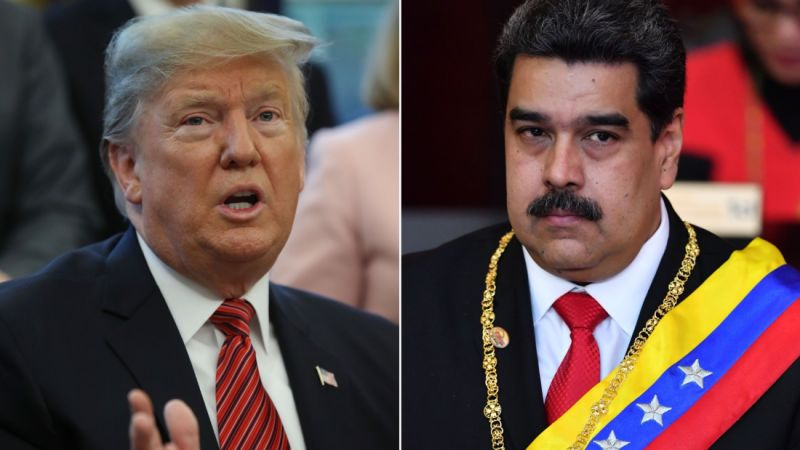
Former President Donald Trump has once again stripped away diplomatic ambiguity, making explicit what critics have long argued: U.S. policy toward Venezuela is deeply rooted in control over oil. Following a dramatic U.S. operation that resulted in the detention of Venezuelan President Nicolás Maduro, Trump publicly framed the intervention not only as a political or security matter, but as an economic opportunity tied directly to Venezuela’s vast energy reserves.
Speaking to reporters after the operation, Trump claimed that Venezuela had “stolen” oil that should have benefited the United States and made it clear that American involvement would lead to significant financial returns. “We’re going to make a lot of money,” he said, adding that U.S. energy companies would take the lead in restoring and operating Venezuela’s oil infrastructure. The bluntness of the remarks marked a rare moment in which a U.S. leader openly linked regime change to resource extraction.
Venezuela possesses the largest proven oil reserves in the world, surpassing even Saudi Arabia. Yet despite this immense natural wealth, years of mismanagement, corruption, and international sanctions have left the country’s oil sector in ruins. Production has collapsed from millions of barrels per day to a fraction of that amount, contributing directly to Venezuela’s broader economic and humanitarian crisis.
Trump’s comments revive long-standing tensions over sovereignty and energy. For much of the 20th century, U.S. oil companies played a dominant role in Venezuela’s petroleum industry. That relationship changed dramatically after the country nationalized its oil sector in the 1970s, a process that accelerated under former President Hugo Chávez and later under Maduro. Foreign firms were pushed out, and the state-owned oil company, PDVSA, became the primary vehicle for managing oil revenues — often with disastrous results.
U.S. sanctions imposed over the past decade further isolated PDVSA, restricting its access to technology, financing, and international markets. While sanctions were officially justified as a response to democratic backsliding and human rights abuses, critics argue they also served to weaken Venezuela’s control over its most valuable asset. Trump’s recent remarks appear to confirm those suspicions, reframing nationalization not as a sovereign policy choice but as an illegitimate seizure of wealth.
International reaction has been swift and divided. Russia and several regional powers have condemned the operation as a violation of international law, warning that the open pursuit of natural resources through military force sets a dangerous precedent. Analysts note that Trump’s rhetoric echoes earlier eras of U.S. intervention in Latin America, when access to strategic commodities often shaped foreign policy decisions.
Supporters of the move, however, argue that Venezuela’s oil wealth has been squandered by an authoritarian regime that used energy revenues to entrench power rather than invest in infrastructure or social stability. From this perspective, U.S. involvement is framed as both a corrective measure and a pragmatic response to global energy needs. With oil markets sensitive to geopolitical disruptions, restoring Venezuelan production could, in theory, benefit consumers worldwide.
Still, the practical challenges are enormous. Venezuela’s oil facilities have suffered from years of neglect, equipment failure, and skilled labor flight. Industry experts estimate that restoring production to former levels would require tens of billions of dollars and sustained investment over many years. Even with U.S. backing, results would not be immediate.
Ultimately, Trump’s unusually candid statements have shifted the debate. While official narratives continue to emphasize democracy and stability, the repeated focus on oil revenue and profit leaves little doubt that economic gain is central to the strategy. In doing so, Trump has reignited fundamental questions about the role of resources in U.S. foreign policy — and whether regime change, when tied so explicitly to profit, can ever be separated from exploitation.
