Close Menu
ceofeature.com

    Subscribe to Updates

    Subscribe to our newsletter for the latest leadership tips, exclusive interviews, and expert advice from top CEOs. Simply enter your email below and stay ahead of the curve!.

    What's Hot

    Dollar retains most of gains after FOMC minutes; euro on backfoot

    February 19, 2026

    Chinese tech companies progress 'remarkable,' OpenAI's Altman tells CNBC

    February 19, 2026

    Asia FX falls, dollar firms on hawkish Fed mins; Aussie gains on strong jobs

    February 19, 2026
    Facebook X (Twitter) Instagram
    ceofeature.com
    ceofeature.com
    ceofeature.com
    • Home
    • Business
    • Lifestyle
    • CEO News
    • Investing
    • Opinion
    • Market
    • Magazine
    Facebook X (Twitter) Instagram YouTube
    Subscribe
    ceofeature.com
    Home What a federal trade court block on Trump tariffs means for consumers
    Business

    What a federal trade court block on Trump tariffs means for consumers

    Daniel snowBy Daniel snowMay 30, 20254 Mins Read
    Share
    Facebook Twitter LinkedIn Pinterest Email Copy Link


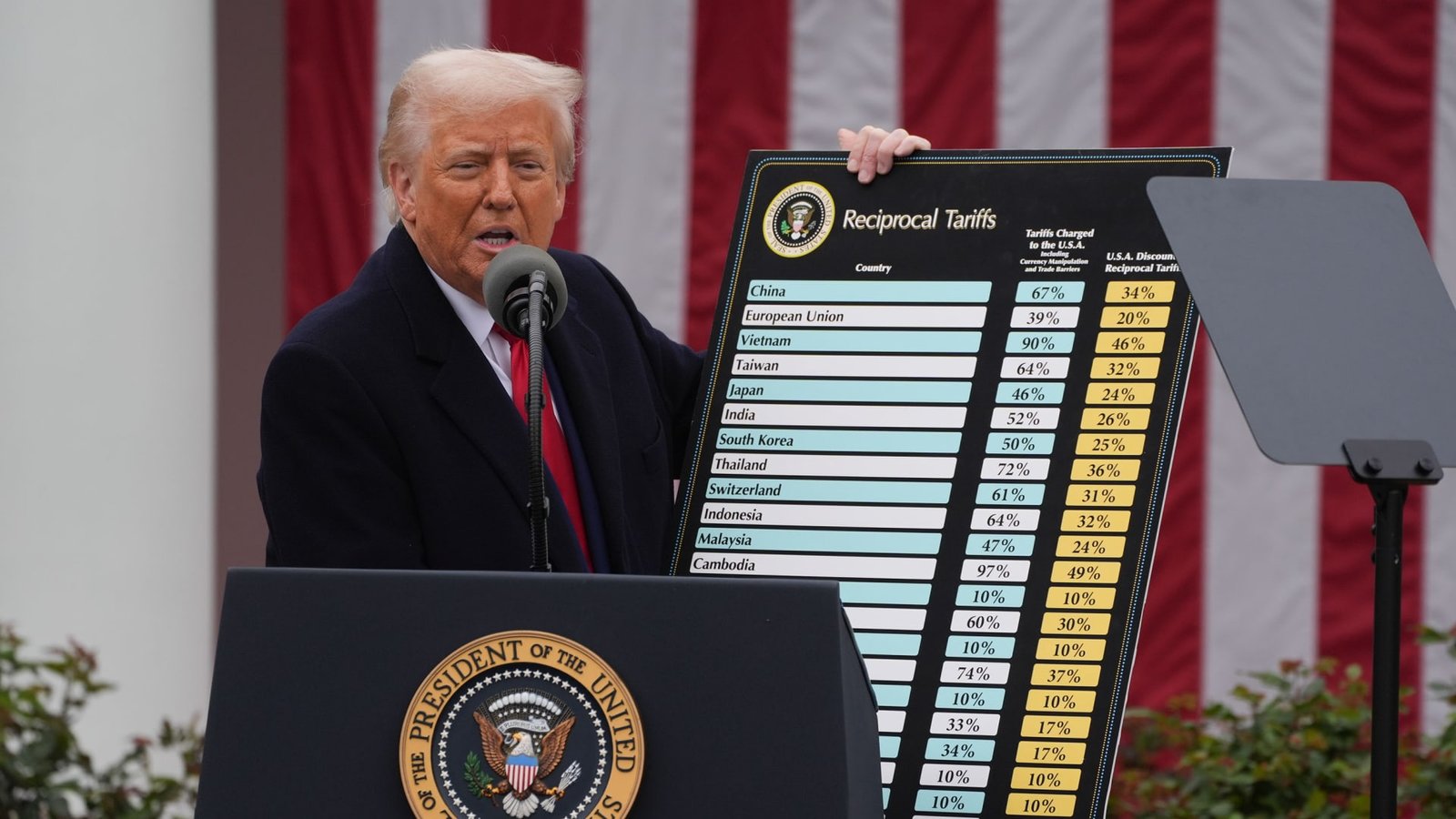
    President Donald Trump holds a chart as he announces a plan for tariffs on imported goods during an event April 2, 2025, in the Rose Garden at the White House.

    Demetrius Freeman/The Washington Post via Getty Images

    The fate of many of President Trump’s tariffs is uncertain after a string of court rulings this week.

    But even if a court block on country-specific tariffs is upheld, others that would remain on the books — for products like steel and automobiles — are still expected to cost consumers almost $1,000 a year, according to a new analysis by the Yale Budget Lab.

    “It does pinch” consumers’ wallets, said Ernie Tedeschi, director of economics at the Yale Budget Lab and former chief economist at the White House Council of Economic Advisers during the Biden administration.

    Tariffs are a tax paid on imports, paid by U.S. entities importing the good. Businesses are expected to pass on at least some of those costs to consumers.

    However, the dollar impact of those remaining tariffs is “a far cry” from what it would be if the country-specific tariffs were to remain, he said.

    The U.S. Court of International Trade on Wednesday blocked country-specific tariffs, including a 10% baseline tariff on most nations and separate levies on Canada, Mexico and China tied to allegations of fentanyl trafficking.

    A three-judge panel found Trump exceeded his authority by invoking the International Emergency Economic Powers Act to impose those import duties.

    An appeals court temporarily paused the order on Thursday as it reviews the case.

    Trump tariffs reinstated by appeals court for now

    Steel, aluminum auto tariffs remain

    However, 25% tariffs on steel, aluminum, automobiles and auto parts are still in place, with some carve-outs, as well as certain tariffs on China imposed during Trump’s first term and expanded during the Biden administration, Jennifer McKeown and Stephen Brown, economists at Capital Economists, wrote in a note Thursday.

    Those tariffs were imposed using different legal authorities.

    If the lower court’s order holds, those remaining tariffs would cost the average household $950 of purchasing power in 2025, according to the Yale Budget Lab analysis published Thursday. That amounts to a 0.6% increase in consumer prices, it found.

    More from Personal Finance:
    Trump administration axes Biden-era barrier for crypto in 401(k) plans
    Trade schools may be a winner of battle between Trump, Harvard
    Court order challenges Trump’s plan to move federal student loans

    Another way consumers can view this legal development: The initial court ruling, if upheld, would save households more than $1,800 this year, said Tedeschi.

    That’s because the average household would lose about $2,800 in 2025 if the country-specific tariffs were to stay on the books, Tedeschi said.

    In that case, consumer prices would rise about 1.7% this year, he said.

    McKeown and Brown estimate the court ruling would lower the effective tariff rate to 6.5% from 15%. It was 2.5% at the start of the year, they said.

    “The most direct impact” of the remaining tariffs will be on car buying, Tedeschi said. Car prices would likely rise about 8% this year and 5% over the longer term, he said.

    But steel and aluminum are inputs in a swath of consumer products, from homebuilding to household appliances.

    Not necessarily ‘the end of things’ for tariffs

    The Supreme Court may be the final arbiter for Trump’s country-specific tariffs, a process that may take “many months,” according to McKeown and Brown.

    Additionally, “it would be unlikely to mark the end of the tariff war given the various other routes through which the Trump administration could impose tariffs,” they wrote.

    The Trump administration has also signaled an intent to put duties on additional products like pharmaceuticals, semiconductors, copper and lumber.

    Yesterday’s court decision was a “landmark ruling,” Tedeschi said. “I don’t expect it’ll be the end of things.”


    Source link

    Follow on Google News Follow on Flipboard
    Share. Facebook Twitter Pinterest LinkedIn Tumblr Email
    Daniel snow
    • Website

    Related Posts

    MrBeast Expands Into Fintech With Acquisition of Step

    February 10, 2026

    New Anthropic AI Tool Sparks $285 Billion Rout Across Global Markets

    February 7, 2026

    PayPal Dumps CEO in Surprise Shake-Up, Poaches HP’s Top Executive as Replacement

    February 7, 2026
    Leave A Reply Cancel Reply

    Top Posts

    What Happens When a Teen Prodigy Becomes a Power CEO?

    September 15, 2025

    Acun Ilıcalı and Esat Yontunç Named in Expanding Investigation as Authorities Remain Silent

    January 27, 2026

    Queen of the North: How Ravinna Raveenthiran is Redefining Real Estate with Resilience and Compassion

    October 22, 2024

    Redefining leadership and unlocking human potential, Meet Janice Elsley

    June 4, 2025
    Don't Miss

    Dollar retains most of gains after FOMC minutes; euro on backfoot

    By Daniel snowFebruary 19, 2026

    Dollar retains most of gains after FOMC minutes; euro on backfoot Source link

    Chinese tech companies progress 'remarkable,' OpenAI's Altman tells CNBC

    February 19, 2026

    Asia FX falls, dollar firms on hawkish Fed mins; Aussie gains on strong jobs

    February 19, 2026

    South African rand forecast to strengthen further as UBS lowers USD/ZAR target

    February 18, 2026
    Stay In Touch
    • Facebook
    • Twitter

    Subscribe to Updates

    Subscribe to our newsletter for the latest leadership tips, exclusive interviews, and expert advice from top CEOs. Simply enter your email below and stay ahead of the curve!.

    About Us
    About Us

    Welcome to CEO Feature, where we dive deep into the exhilarating world of entrepreneurs and CEOs from across the globe! Brace yourself for captivating stories that will blow your mind and leave you inspired.

    Facebook X (Twitter)
    Featured Posts

    The Art of Private Luxury – Vanke Jinyu Huafu by Mr. Tony Tandijono

    September 28, 2018

    5 Simple Tips to Take Care of Larger Air Balloons

    January 4, 2020

    5 Ways Your Passport Can Ruin Your Cool Holiday Trip

    January 5, 2020
    Worldwide News

    5 Flavoursome Pizza Shops you Should Check Out in Toronto

    January 13, 20210

    Save $90 on The HS700E 4K Drone, An Ideal Beginner

    January 14, 20210

    Cryptographers Are Not Happy With How Using the Word ‘Crypto’

    January 14, 20210
    • www.ceofeature.com
    @2025 copyright by ceofeature

    Type above and press Enter to search. Press Esc to cancel.