


[ad_1]
Kate_sept2004 | E+ | Getty Images
Long-term care can be costly, extending well beyond $100,000. Yet, financial advisors say many households aren’t prepared to manage the expense.
“People don’t plan for it in advance,” said Carolyn McClanahan, a physician and certified financial planner based in Jacksonville, Florida. “It’s a huge problem.”
Over half, 57%, of Americans who turn 65 today will develop a disability serious enough to require long-term care, according to a 2022 report published by the U.S. Department of Health and Human Services and the Urban Institute. Such disabilities might include cognitive or nervous system disorders like dementia, Alzheimer’s or Parkinson’s disease, or complications from a stroke, for example.
The average future cost of long-term care for someone turning 65 today is about $122,400, the HHS-Urban report said.
But some people need care for many years, pushing lifetime costs well into the hundreds of thousands of dollars — a sum “out of reach for many Americans,” report authors Richard Johnson and Judith Dey wrote.

The number of people who need care is expected to swell as the U.S. population ages amid increasing longevity.
“It’s pretty clear [workers] don’t have that amount of savings in retirement, that amount of savings in their checking or savings accounts, and the majority don’t have long-term care insurance,” said Bridget Bearden, a research and development strategist at the Employee Benefit Research Institute.
“So where is the money going to come from?” she added.
Long-term care costs can exceed $100,000
While most people who need long-term care “spend relatively little,” 15% will spend at least $100,000 out of pocket for future care, according to the HHS-Urban report.
Expense can differ greatly from state to state, and depending on the type of service.
Nationally, it costs about $6,300 a month for a home health aide and $9,700 for a private room in a nursing home for the typical person, according to 2023 data from Genworth, an insurer.
It seems many households are unaware of the potential costs, either for themselves or their loved ones.
For example, 73% of workers say there’s at least one adult for whom they may need to provide long-term care in the future, according to a new poll by the Employee Benefit Research Institute.
However, just 29% of these future caregivers — who may wind up footing at least part of the future bill —had estimated the future cost of care, EBRI found. Of those who did, 37% thought the price tag would fall below $25,000 a year, the group said.
The EBRI survey polled 2,445 employees from ages 20 to 74 years old in late 2024.
Many types of insurance often don’t cover costs
Maskot | Maskot | Getty Images
There’s a good chance much of the funding for long-term care will come out-of-pocket, experts said.
Health insurance generally doesn’t cover long-term care services, and Medicare doesn’t cover most expenses, experts said.
For example, Medicare may partially cover “skilled” care for the first 100 days, said McClanahan, the founder of Life Planning Partners and a member of CNBC’s Financial Advisor Council. This may be when a patient requires a nurse to help with rehab or administer medicine, for example, she said.
Where is the money going to come from?
Bridget Bearden
research and development strategist at the Employee Benefit Research Institute
But Medicare doesn’t cover “custodial” care, when someone needs help with daily activities like bathing, dressing, using the bathroom and eating, McClanahan said. These basic everyday tasks constitute the majority of long-term care needs, according to the HHS-Urban report.
Medicaid is the largest payer of long-term care costs today, Bearden said. Not everyone qualifies, though: Many people who get Medicaid benefits are from lower-income households, EBRI’s Bearden said. To receive benefits for long-term care, households may first have to exhaust a big chunk of their financial assets.
“You basically have to be destitute,” McClanahan said.
Republicans in Washington are weighing cuts to Medicaid as part of a large tax-cut package. If successful, it’d likely be harder for Americans to get Medicaid benefits for long-term care, experts said.
Long-term care insurance considerations
The Good Brigade | Digitalvision | Getty Images
Few households have insurance policies that specifically hedge against long-term care risk: About 7.5 million Americans had some form of long-term care insurance coverage in 2020, according to the Congressional Research Service.
By comparison, more than 4 million baby boomers are expected to retire per year from 2024 to 2027.
Washington state has a public long-term care insurance program for residents, and other states like California, Massachusetts, Minnesota, New York and Pennsylvania are exploring their own.

Long-term care insurance policies make most sense for people who have a high risk of needing care for a lengthy duration, McClanahan said. That may include those who have a high risk of dementia or have longevity in their family history, she said.
McClanahan recommends opting for a hybrid insurance policy that combines life insurance and a long-term care benefit; traditional stand-alone policies only meant for long-term care are generally expensive, she said.
Be wary of how the policy pays benefits, too, she said.
For example, “reimbursement” policies require the insured to choose from a list of preferred providers and submit receipts for reimbursement, McClanahan said. For some, especially seniors, that may be difficult without assistance, she said.
With “indemnity” policies, which McClanahan recommends, insurers generally write benefit checks as soon as the insured qualifies for assistance, and they can spend the money how they see fit. However, the benefit amount is often lower than reimbursement policies, she said.
How to be proactive about long-term care planning
“The challenge with long-term care costs is they’re unpredictable,” McClanahan said. “You don’t always know when you’ll get sick and need care.”
The biggest mistake McClanahan sees people make relative to long-term care: They don’t think about long-term care needs and logistics, or discuss them with family members, long before needing care.
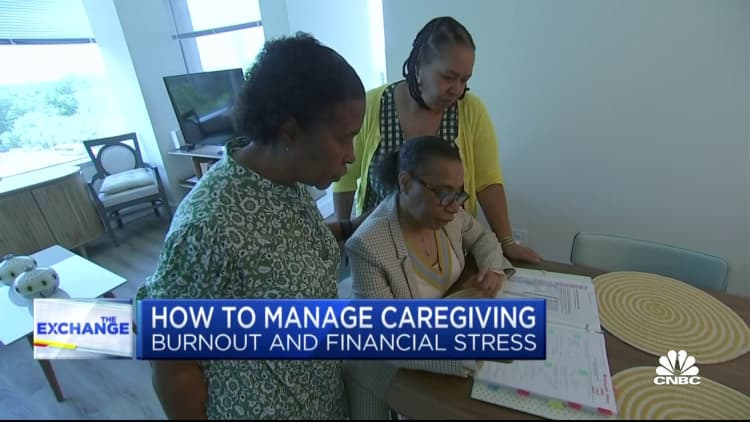
For example, that may entail considering the following questions, McClanahan said:
- Do I have family members that will help provide care? Would they offer financial assistance? Do I want to self-insure?
- What are the financial logistics? For example, who will help pay your bills and make insurance claims?
- Do I have good advance healthcare directives in place? For example, as I get sicker will I let family continue to keep me alive (which adds to long-term care expenses), or will I move to comfort care and hospice?
- Do I want to age in place? (This is often a cheaper option if you don’t need 24-hour care, McClanahan said.)
- If I want to age in place, is my home set up for that? (For example, are there many stairs? Is there a tiny bathroom in which it’s tough to maneuver a walker?) Can I make my home aging-friendly, if it’s not already? Would I be willing to move to a new home or perhaps another state with a lower cost of long-term care?
- Do I live in a rural area where it may be harder to access long-term care?
Being proactive can help families save money in the long term, since reactive decisions are often “way more expensive,” McClanahan said.
“When you think through it in advance it keeps the decisions way more level-headed,” she said.
[ad_2]
Source link
