

Robinhood is expanding its push to democratize investing with a new fund designed to give everyday traders access to some of the most sought-after private technology companies.
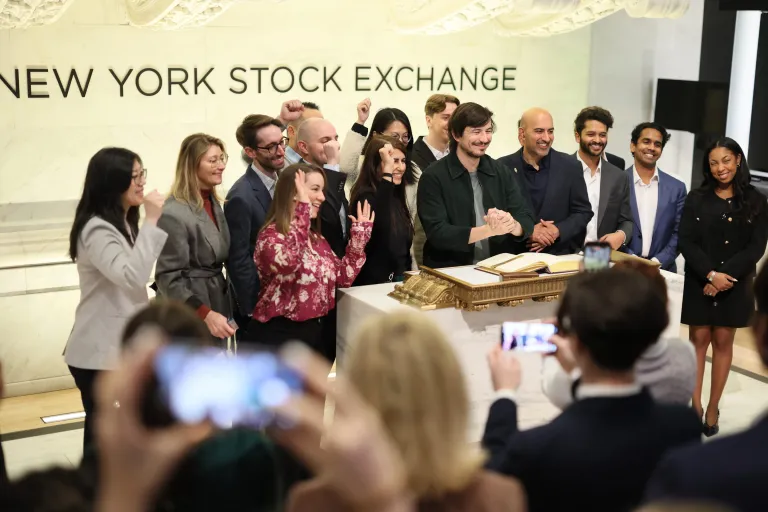
The brokerage platform, led by cofounder and CEO Vlad Tenev, recently launched Robinhood Ventures Fund I, a closed-end investment vehicle that allows retail investors to gain exposure to high-profile private startups such as Databricks and Ramp. Tenev unveiled the fund while ringing the opening bell at the New York Stock Exchange.
The initiative reflects Robinhood’s broader mission of giving retail investors access to financial opportunities traditionally reserved for institutional or accredited investors. Tenev argues that limiting these opportunities to wealthy investors contributes to widening wealth inequality.
Private markets have increasingly become the center of major technology growth, with companies often staying private longer before going public. As a result, large venture capital firms and institutional investors typically capture much of the early upside before everyday investors can participate.
Robinhood aims to change that dynamic by offering retail users a pathway into these private markets. The new fund holds stakes in several fast-growing private companies, including Mercor and Oura, alongside Databricks and Ramp.
However, the model comes with significant risks. Unlike venture capital firms that have direct access to financial data from portfolio companies, retail investors in the fund will have limited visibility into the underlying businesses. The fund’s prospectus acknowledges that there will be uncertainty around the valuation of its private holdings.
Another key feature is that the fund is structured as a closed-end vehicle. Investors can trade shares with one another on the market but cannot redeem them directly with Robinhood for the underlying assets.
Robinhood has previously attempted similar initiatives with mixed results. Last year, the company proposed offering tokenized shares of OpenAI to European users, though the AI company publicly stated it was not involved in the plan.
Despite those setbacks, Tenev continues to pursue broader access to private markets. He has described the concentration of investment opportunities in private companies as a “big tragedy” for everyday investors.
Whether retail traders will embrace the risks associated with private startup investing remains uncertain. Early market reaction to the new fund was cautious, with shares falling about 11% during the first day of trading.
The success of Robinhood’s strategy may ultimately depend on whether retail investors are willing to balance the excitement of investing in high-growth startups with the significant uncertainty surrounding their valuations and performance.
