

[ad_1]

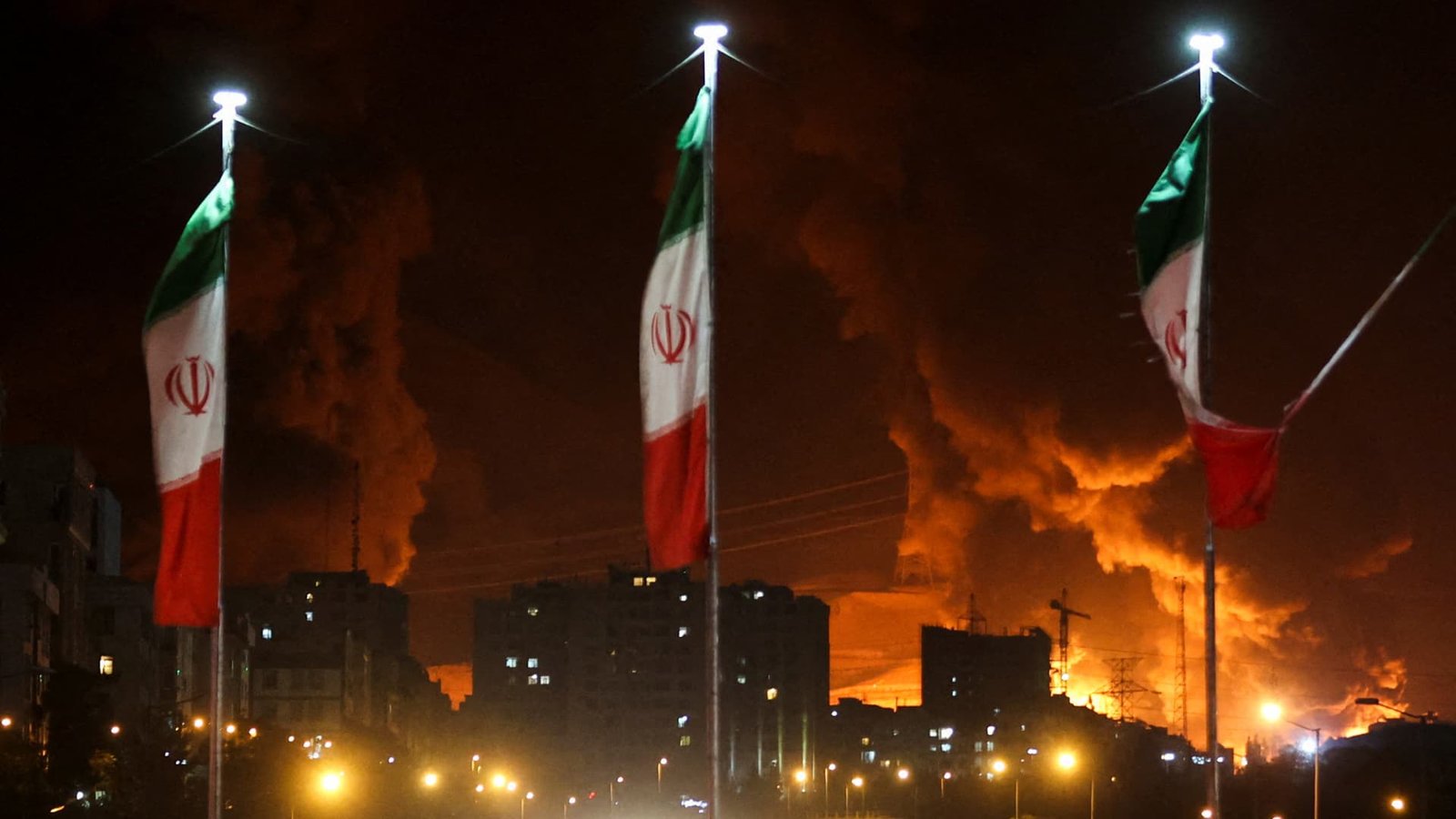
Senior Israeli officials said this week that their military campaign against Iran could trigger the fall of the regime, an event that would have enormous implications for the global oil market.
The oil market has reacted with remarkable restraint as Israel has bombed the third-largest crude producer in OPEC for eight straight days, with no clear sign the conflict will end anytime soon.
Oil prices are up about 10% since Israel launched its attack on Iran a week ago, but with oil supplies so far undisturbed, both U.S. crude oil and the global benchmark Brent remain below $80 per barrel.
Rising risk
Still, the risk of a supply disruption that triggers a big spike in prices is growing the longer the conflict rages on, according to energy analysts.
President Donald Trump has threatened the life of Iran’s supreme leader Ayatollah Ali Khamenei and is considering helping Israel destroy the Islamic Republic’s nuclear program. For its part, Iran’s leadership is more likely to target regional oil facilities if it feels its very existence is at stake, the analysts said.
Israel’s primary aim is to degrade Iran’s nuclear program, said Scott Modell, CEO of the consulting firm Rapidan Energy Group. But Jerusalem also appears to have a secondary goal of damaging Iran’s security establishment to such an extent that the country’s domestic opposition can rise up against the regime, Modell said.
“They’re not calling it regime change from without, they’re calling it regime change from within,” said Modell, a former CIA officer and Iran expert who served in the Middle East.
Official denial
Prime Minister Benjamin Netanyahu denies that regime change is Israel’s official goal, telling a public broadcaster on Thursday that domestic governance is an internal Iranian decision. But the prime minister ascknowledged Khamenei’s regime could fall as a consequence of the conflict.
Defense Minister Israel Katz on Friday ordered Israel’s military to intensify strikes on Iran with a goal to “destabilize the regime” by attacking the “foundations of its power.” Israel reportedly sought to kill Khamenei in the opening days of its campaign, but Trump vetoed the plan.
There are no signs that the regime in Iran is on the verge of collapse, Modell said.
But further political destabilization in Iran “could lead to significantly higher oil prices sustained over extended periods,” said Natasha Kaneva, head of global commodities research at JPMorgan, in a note to clients this week.
There have been eight cases of regime change in major oil producing countries since 1979, according to JPMorgan. Oil prices spiked 76% on average at their peak in the wake of these changes, before pulling back to stabilize at a price about 30% higher compared to pre-crisis levels, according to the bank.
For example, oil prices nearly tripled from mid-1979 to mid-1980 after the Iranian revolution deposed the Shah and brought the Islamic Republic to power, according to JPMorgan. That triggered a worldwide economic recession.

More recently, the revolution in Libya that overthrew Muammar Gaddafi jolted oil prices from $93 per barrel in January 2011 to $130 per barrel by April that year, according to JPMorgan. That price spike coincided with the European debt crisis and nearly caused a global recession, according to the bank.
Bigger than Libya
Regime change in Iran would have a much bigger impact on the global oil market than the 2011 revolution in Libya because Iran is far bigger producer, Modell said.
“We would need to see some strong indicators that the state is coming to a halt, that regime change is starting to look real before the market would really start pricing in three plus million barrels a day going offline,” Modell said.
If the regime in Iran believes it is facing an existential crisis, it could use its stockpile of short-range missiles to target energy facilities in the region and oil tankers in the Persian Gulf, said Helima Croft, head of global commodity strategy at RBC Capital Markets.
Tehran could also try to mine the Strait of Hormuz, the narrow body of water between Iran and Oman through which about 20% of the world’s oil flows, Croft said.
“We’re already getting reports that Iran is jamming ship transponders very, very aggressively,” Croft told CNBC’s “Fast Money” on Wednesday. QatarEnergy and the Greek Shipping Ministry have already warned their vessels to avoid the strait as much as possible, Croft said.
“These are not calm waters even though we have not had missiles flying in the straits,” she said.

Greater than even odds
Rapidan sees a 70% chance the U.S. will join Israeli airstrikes against Iran’s nuclear facilities. Oil prices would probably rally $4 to $6 per barrel if Iran’s key uranium enrichment facility at Fordow is hit, Modell said. Iran will likely respond in a limited fashion to ensure the regime’s survival, he said.
But there is also a 30% risk of Iran disrupting energy supplies by retaliating against infrastructure in the Gulf or vessels in the Strait of Hormuz, according to Rapidan. Oil prices could surge above $100 per barrel if Iran fully mobilizes to disrupt shipping in the strait, according to the firm.
“They could disrupt, in our view, shipping through Hormuz by a lot longer than the market thinks,” said Bob Bob McNally, Rapidan’s founder and former energy advisor to President George W. Bush.
Shipping could be interrupted for weeks or months, McNally said, rather than the oil market’s view that the United States Fifth Fleet, based in Bahrain, would resolve the situation in hours or days.
“It would not be a cakewalk,” he said.
[ad_2]
Source link
